

Countries of the World - Austria

@just4him (323168)
Green Bay, Wisconsin

June 27, 2024 3:50pm CST
As usual, I did not include military and government history.
AUSTRIA
Formerly called the Republic of Austria, it has an area of 83,879 square kilometers or 32,386 square miles and around nine million people. Located in Central Europe in the Eastern Alps. Austria is landlocked with Germany to the northwest, the Czech Republic to the north, Slovakia to the northeast, Hungary to the east, Slovenia and Italy to the south, and Switzerland and Liechtenstein to the west. It is a federation of nine federal states with the capital, Vienna, as one of the states. Vienna is also the most populous city in Austria.
Geography
Austria is a mountainous country comprising of three mountain ranges: Central Eastern Alps, Northern Limestone Alps, and Southern Limestone Alps. These mountain ranges don’t inhabit all the country, but a portion of each range can be found within its borders. Only a small portion of Austria can be considered as low-lying.
Austria can be divided into five areas: the Eastern Alps, the largest part, the Austrian foothills at the base of the Alps, the Carpathians, and the foothills in the east, and the Pannoni low country. A second greater mountain area is in the north known as the Austrian granite plateau located in the central area of the Bohemian Mass. The Vienna basin makes up the remainder of Austria.
Climate
Most of Austria lies in the cool/temperate climate zone predominated by humid westerly winds. The Alpine climate dominates three-quarters of the country. The Pannonian Plain and Danube Valley have less rain than alpine areas. Temperatures in winter range from -10 C to 0 C. Summer temperatures range in the mid-20s with the highest recorded in in August 2013 at 40.5 C or 105 F.
The Köppen Climate Classification has the following climate classifications for Austria: Oceanic, Cool/Warm-summer humid continental, Subarctic/Subalpine, Tundra/Alpine, and Ice-Cap. Though Austria may experience very cold winters, most of the time they are about as cold as comparable climate zone in Southern Scandinavia or Eastern Europe. The subarctic and tundra climates around the Alps are warmer than what is considered normal because of the Oceanic influence of that part of Europe.
Statistics
Capital: Vienna
Official Language: German
National Language: Austrian German
Official Regional Languages: Hungarian, Slovene, Burgenland, Croatian
Religion: Christianity, Islam
Government: Federal semi-presidential republic
President: Alexander Van der Bellen
Chancellor: Karl Nehammer
Legislature: Parliament
Upper House: Federal Council
Lower House: National Council
Formation:
Name: 1 November 996
Duchy: 17 September 1156
Archduchy: 6 January 1453
Empire: 11 August 1804
Austria-Hungary: 30 March 1867
Republic of German Austria: 12 November 1918
First Republic: 10 September 1919
Federal State: 1 May 1934
Anschluss: 13 March 1938
Second Republic: 27 April 1945
State Treaty: 27 July 1955
Joined the European Union: 1 January 1995
You can see Austria has been around for a long time. It dates to the Paleolithic period. In 400 B.C. it was inhabited first by Celts, then annexed by the Romans in the late first century. Christianization began in the fourth and fifth centuries during the late Roman period. Germanic tribes arrived after the Roman period during the migration period. As a unified state, Austria emerged from the remnants of the Eastern and Hungarian March at the end of the first millennium, first as a frontier march of the Holy Roman Empire, then developed into a duchy in 1156 and archduchy in 1453. Austria was also the heartland of the Habsburg monarchy since the late thirteenth century. It was a major imperial power in Central Europe, and from the sixteenth century, Vienna served as the Holy Roman Empire’s administrative capital. In 1804 Austria established its own empire and became a great power and one of the largest states in Europe during its entire existence. Defeat in wars and loss of territories in the 1860s led to the establishment of Austria-Hungary in 1867.
Independence
On 15 May 1955 Austria regained full independence by concluding the Austrian State Treaty with the allies of World War II. On 26 October 1955 Austria declared its permanent neutrality by act of parliament and has become Austria’s National Day.
Economy
Austria ranks high in GDP per capita because of its industrialized economy and social market economy. Next to a highly developed industry international tourism is the most important part of Austria’s economy.
Culture
Music
You cannot think of Austria without its music. It is the birthplace of many famous composers: Joseph Haydn, Michael Haydn, Franz Liszt, Franz Schubert, Anton Bruckner, Johann Strauss Sr. and Jr. Members of the Second Viennese School: Arnold Schoenberg, Anton Webern, and Alban Berg, Wolfgang Amadeus Mozart was born in Salzburg, originally an independent Church Principality of the Holy Roman Empire, later became part of Austria. He spent most of his career in Vienna. Ludwig van Beethoven also spent the better part of his life in Vienna. Austria’s current National Anthem is attributed to Mozart.
Cinema and Theater
Do these names sound familiar to you? Many famous filmmakers, actors and actresses came from Austria: Sascha Kolowrat, Billy Wilder, Fritz Lang, Josef von Sternberg, Fred Zinnemann, Willi Frost, Ernst Marischka, Franz Antel, Michael Haneke, Stefan Ruzowitzky, Peter Lorre, Helmet Berger, Curd Jürgens, Senta Berger, Oskar Werner, Klaus Maria Brandauer, Hedy Lamarr, Arnold Schwarzenegger, Christopher Waltz, Max Reinhardt, and Otto Schenk.
Science and Philosophy
Austria also has many famous scientists and physicists: Ludwig Boltzmann, Ernst Mach, Victor Franz Hess, Christian Doppler, Lise Meitner, Erwin Schrödinger, Wolfgang Pauli, Anton Zeilinger, and Peter Zoller. Philosophers: Ludwig Wittgenstein and Karl Popper. Biologists: Gregor Mendel and Konrad Lorenz. Mathematician Kurt Gödel. Engineers: Ferdinand Porsche and Siegfried Marcus. Bertha von Suttner became the first woman awarded the Nobel Peace Prize, and the first Austrian laureate.
Medicine and Psychology started in medieval times with Paracelsus. Eminent physicians: Theodore Billroth, Clemens von Pirquet, Anton von Eiselsberg, Sigmund Freud, Alfred Adler, Paul Watzlawick, Hans Asperger, and Victor Frankl.
Austrian School of Economics produced these famous people: Carl Menger, Joseph Schumpeter, Eugen von Böhm-Bawerk, Ludwig von Mises, and Friedrich Hayek. Other noteworthy Austrian born émigrés include management thinker Peter Drucker, Sociologist Paul Felix Lazarsfeld, and scientist Sir Gustav Nossal.
Cuisine
You can’t think about Austrian cuisine without strudel among other delectable delicacies found on your bakery shelves. Their cuisine is influenced by Hungarian, Czech, Polish, Jewish, Italian, Balkan, and French cuisines.
Sports
Alpine skiing, snowboarding, and ski-jumping are prominent sports in Austria producing many of the greatest athletes of all time. They also have bobsleigh, luge, and skeleton.
Football is governed by the Austrian Football Association. Besides football, they also have ice hockey, basketball, and the Austrian Football League for American football. Horseback riding is also popular. The famous Spanish Riding School of Vienna is in Vienna.
You will also find Formula One drivers, tennis players, and the Tour of Austria cycle race.
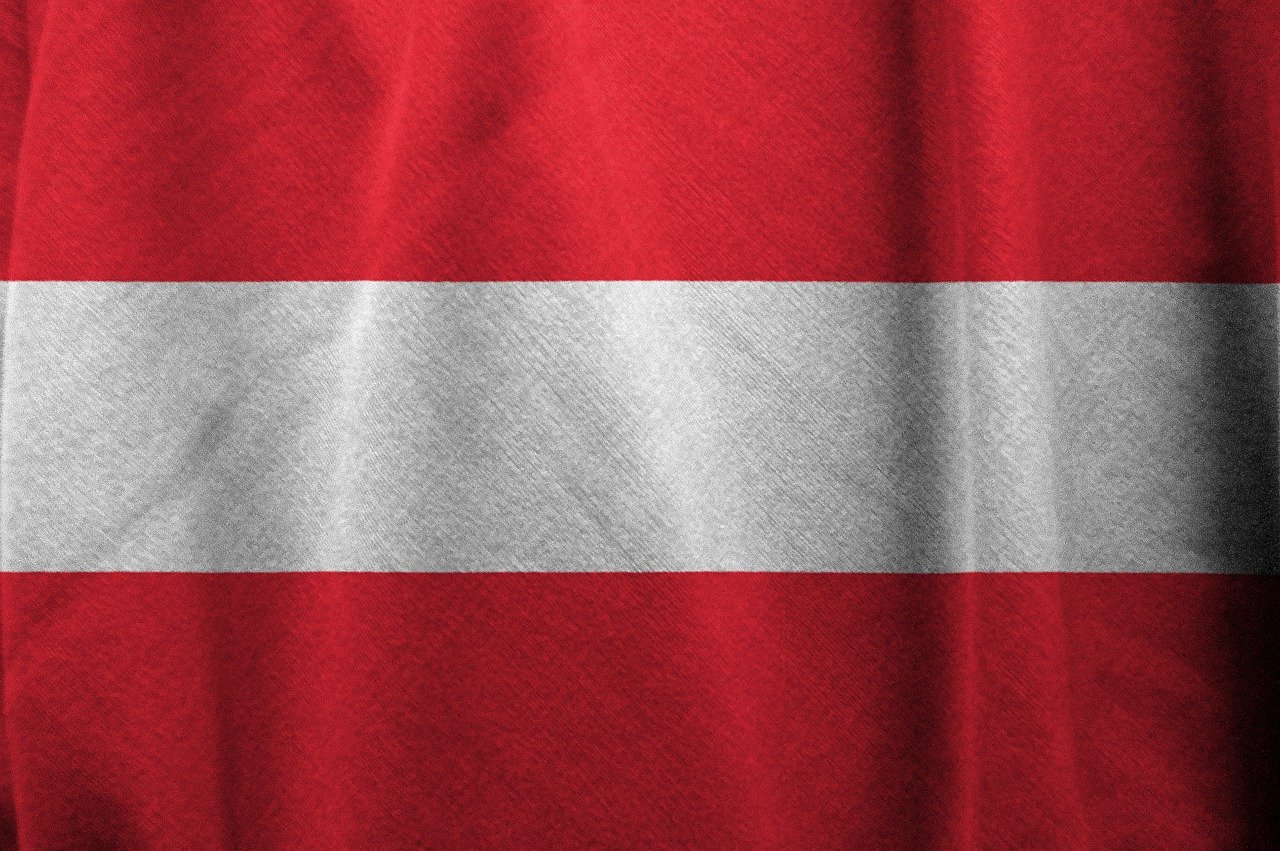
Thanks for reading. The image courtesy of Pixabay.
10 people like this
7 responses

@LadyDuck (502343)
• Italy
28 Jun 24
My nativi city in Italy was part of the Austria-Hungary empire, in fact Milan was called "the little Vienna" in the past.
The landscape of Austria is very similar to the Swiss landscape.
Austria had many great Formula 1 champions, Niki Lauda, Gerhard Berger, Alexander Wurz, Patrick Friesacher e Christian Klien.
1 person likes this

@LindaOHio (222280)
• United States
28 Jun 24
Thank you for a very complete post on Austria. Have a good weekend.
1 person likes this

@LindaOHio (222280)
• United States
29 Jun 24
@just4him You're welcome.
Thank you very much.
1 person likes this


@celticeagle (189820)
• Boise, Idaho
28 Jun 24
It sounds like a lovely area. Thank you for sharing all of this information with us.
1 person likes this

@RasmaSandra (97954)
• Daytona Beach, Florida
27 Jun 24
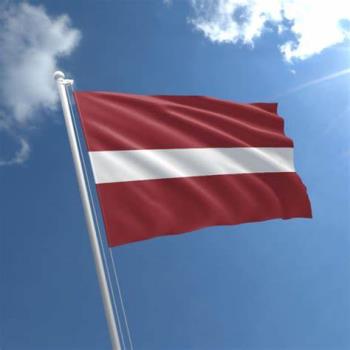
Thank you for sharing about the history of Austria. The Latvian flag is similar but with darker red colors,
1 person likes this


@RevivedWarrior (3853)
• India
28 Jun 24
Great information on Austria. I was not aware of "Austria’s current National Anthem is attributed to Mozart" . Found that more interesting compared to others. Thanks for sharing!

@Deepizzaguy (122101)
• Lake Charles, Louisiana
27 Jun 24
Thank you for sharing the history of Austria.
1 person likes this
