

Treating milk fever with a bicycle pump

By Judy Evans
@JudyEv (381739)
Rockingham, Australia

January 24, 2025 2:27am CST
I wrote about the ‘Madigan squeeze’ which replicates the birth process and is used on calves and foals to help them get started in life. It’s quite a simple technique in a way but surprisingly effective.
MyLotter Lenore Plassman (@sallypup) made a comment which reminded me of a remedy my parents would use if a cow went down (collapsed) with milk fever. Milk fever or hypocalcemia is caused by low levels of calcium in the blood. It occurs mostly when cows calved.
A bicycle pump would be used to inject air into the cow’s udder. I remember the procedure was documented in one of the All Things Bright and Beautiful veterinary books. Of course, they have much more modern treatments now. When my parents were farming, there wasn't a vet within cooee so it was treat animals as best you could and hope for the best.
Pumping air into the udder was believed to stimulate nerves and blood flow, helping boost calcium metabolism. It may also have sent signals to the body to release stored calcium.
Bizarre as this may seem, it did work, and again I can’t help wondering who came up with such a solution.
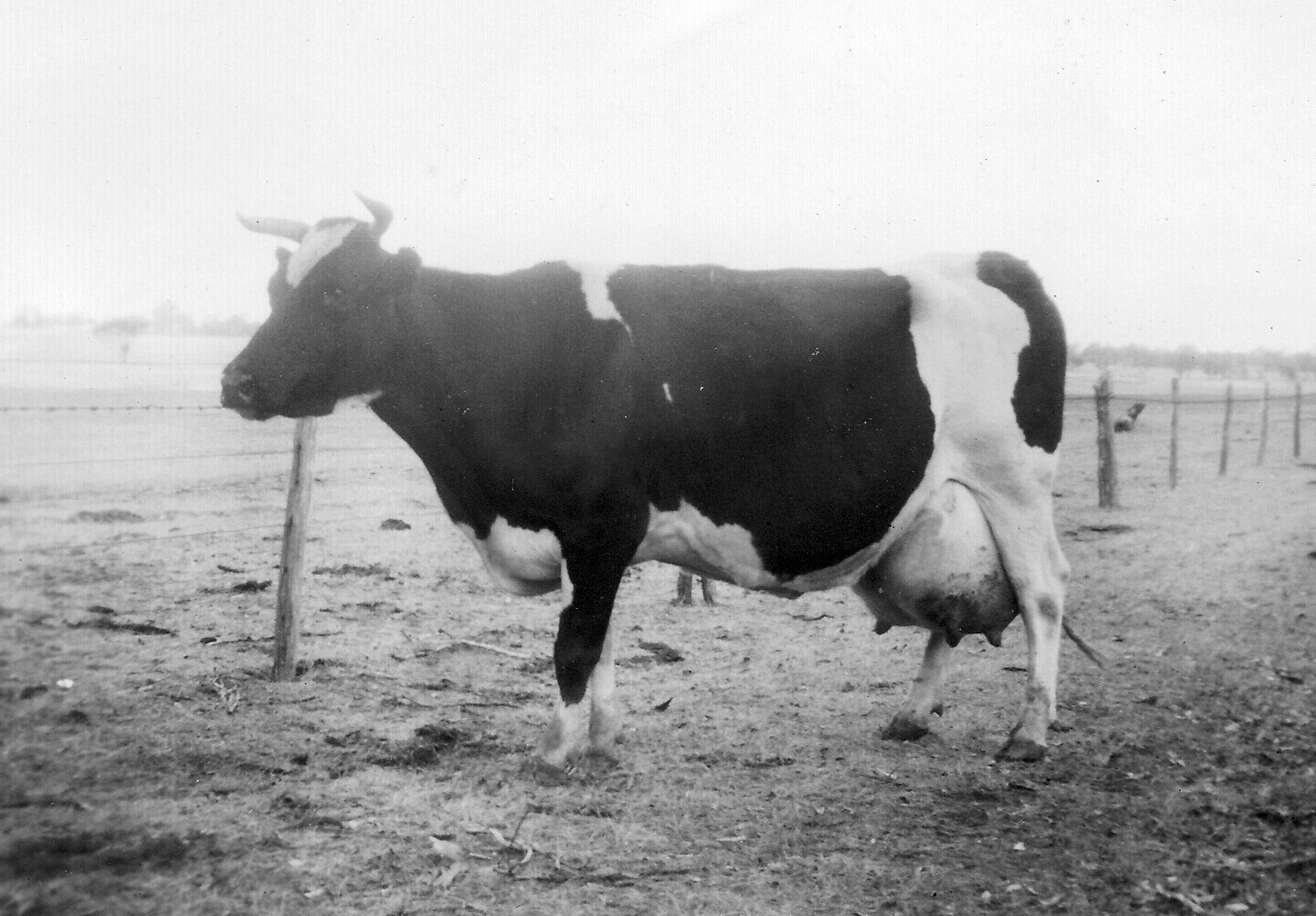
The photo is of one of my grandmother’s dairy cows.
14 people like this
12 responses


@GardenGerty (169406)
• United States
25 Jan 25
I have read those James Heriot books but it has been a while. When you are on your own your teach yourself a thing or two.
3 people like this


@snowy22315 (208746)
• United States
25 Jan 25
That is something. My grandparents had a moderate sized dairy farm, but I didn't know too much about the day to day workings. Even when we spent longer periods of time there like say a weekend or a week, I knew the basic operation but not what went on behind the scenes. The most I ever did there, was go with my grandfather to bring the cows in for milking, and help do some of the feeding.
3 people like this


@allknowing (153544)
• India
24 Jan 25
That cow in the photo seems to have milk by the litres.
3 people like this


@FourWalls (86568)
• United States
25 Jan 25
How innovative they were back then! Explains how we get modern technology in a way…I mean, “hey, let’s hook Bessie the cow up to the bicycle pump” was thinking outside the box (and the udders  )!
)!
)!2 people like this

@wolfgirl569 (135583)
• Marion, Ohio
24 Jan 25
I would never think of something like that
3 people like this

@Fleura (34927)
• United Kingdom
29 Jan 25
And now I found this. It seems injection of air was first used as a treatment, intending to increase the pressure in the udder and thus reduce milk secretion. That seems to have been in 1904. Then farmers heard about it, and not having a means to inject air they used a bicycle pump instead.
https://www.researchgate.net/figure/Equipment-for-insufflation-of-atmospheric-air-into-the-udder-as-a-treatment-for-cows_fig1_267860642
1 person likes this
@Fleura (34927)
• United Kingdom
29 Jan 25
Trying to find who came up with this idea - I found this article from the Sunday Times, 1906.
https://trove.nla.gov.au/newspaper/article/126565741
