Explore
Top Rated Discussions
Most Recent Discussions
Most Recent Activity
Hot Discussions
New User Discussions
Discussions w/ No Response
Help
FAQ
Earnings Program
Community Guidelines
Contact
Sign Up!
Log In
Search
Tagged Discussions
Tagged Responses
Tagged Comments
Tagged All Activity
Users
Full Text Discussions
Full Text Responses
Full Text Comments
Full Text All Activity
X
american revolution
Tagged Discussions
The second American revolution?
Vicki, #1 Creek Girl
@1creekgirl
(44560)
•
United States
7 Nov 24
With the win of Donald Trump for President of the United States, I see some similarities to our first American revolution. These last four years have hurt so many Americans through inflation, an illegal invasion across our...
common sense
american revolution
8 responses
•
8 people
An Historic Event that Took Place Under My Kayak
DW Davis
@DWDavis
(25797)
•
United States
12 Jun 22
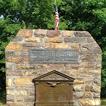
The historic monument in the photo commemorates how, on February 2nd and 3rd, 1781, General Nathanael Greene, during a tactical retreat from British forces led by Lord Cornwallis, forded the Yadkin River at Trading Ford. At the...
american revolution
general nathanael greene
lord cornwallis
traders ford
10 responses
•
10 people
Daughters of The American Revolution.
AmberLynn
@ScribbledAdNauseum
(104615)
•
United States
21 Mar 17
The family member who is researching the other side of my family has come across this quite a bit. He (the researcher) is constantly arguing with people who are attempting to make it seem that our ancestors were in The American...
daughters
dar
american revolution
war
america
5 responses
•
6 people
Have You Ever Visited a Plantation?
Alice Henry
@IreneVincent
(15960)
•
United States
1 Feb 16
Not very far from where I live are several historic plantation homes, which I have visited, I’m happy to say. But, it’s been a long time and I think I would like to revisit them. First, there is Shirley Plantation: It was...
virginia plantations
berkley plantation
shirley plantation
civil war
american revolution
2 responses
•
2 people
No Taxation without Representation!
Nelda Hoxie
@NeldaHoxie
(1381)
•
United States
1 Oct 15
Most Americans know that this was a popular cry during the American Revolution. Very few know where it came from. I have to admit that I didn't. Today, I went out to take videos of haunted historic places on Cape Cod. I ended up...
history
american revolution
james otis
west barnstable
3 responses
•
4 people
Assassins Creed is coming soon!
exkrima
@exkrima
(291)
•
Philippines
22 Mar 12
Assassins Creed will release in October and the settings is about American Revolution what do you think about that? The New Protagonist name is Connor a half British and Half Native American, can't wait to play this game
ac
ac3
american revolution
assassins creed
hidden blade
ubisoft
3 responses
•
2 people
History Proves Palin is Smarter than a Liberal
AnjaP
@Rollo1
(16676)
•
Boston, Massachusetts
6 Jun 11
Historians agree: Palin was right about Paul Revere. Media pundits howled with glee over what they perceived as a gaffe made by Sarah Palin regarding the ride of Paul Revere. Obviously, their knowledge of history extends only...
american revolution
history
palin
revere
ride of paul revere
11 responses
•
2 people
Are you ready for the next revolution?
thinkfuture
@thinkfuture
(191)
•
United States
30 Aug 08
Are you as excited and ready for the next American revolution, the Marxist revolution, that is about to sweep our nation as President Obama takes office? I can't wait to see the amazing changes he will make! I think America is...
american revolution
politics obama biden mccain election 2008 presiden
4 responses
•
1 person
The Declaration of Independence.
WhatsHerName
@WhatsHerName
(2716)
•
United States
25 Apr 08
Have you read it? I think it's the most important document in the world. What do you think? It gives me chills and pride, every time I read it. http://tmra2.org/video/doi_3.wmv Have you ever wondered what happened to the...
american revolution
nelson
planter
trader
5 responses
•
1 person
The American Revolution from the eyes of an English person.
kingcrapper
@kingcrapper
(1536)
•
United States
26 Feb 08
I had the opportunity to visit Bunker Hill last summer. It was a real moving experince for me. Since I am a real history buff and old enough to understand there are always two sides to a coin, I would love to hear the story behind...
american revolution
conflict
england
history
view
war
1 response
More Coffee Shops for Meetings
KennethF
@KennethF
(102)
•
United States
7 Feb 08
What about more coffee shops, and not just Starbucks. With more coffee shops, there could be more places for groups to meet, plan, and discuss. A coffee shop environment is a great place to discuss topics in groups. What better...
american revolution
coffee
1 response
•
1 person
Most Important Moment In History...
twoey68
@twoey68
(13627)
•
United States
14 Oct 07
What do you think is the most important period in history? Why? I think the Revolutionary War was the most important since that was when we won our freedom. Here is a little history on it: The American Revolutionary War...
american revolution
british army
continental
18 responses
•
5 people
Where do you live? Do you know your state flag looks like and it's symbolism?
ctrymuziklvr
@ctrymuziklvr
(11057)
•
United States
28 Sep 07
I live in MA and I was reading about our state flag which I found very interesting. I don't think it's as "fancy" as most state flags are but I like the symbolism behind it. This is what I found out about the MA state...
american revolution
blue ribbon
coat of arms
colors
crest
symbolism
symbols
your state flag
5 responses
•
2 people
refreashe course on Guns
Lakota12
@Lakota12
(42600)
•
United States
16 Sep 07
A good thing to Copy from and email have fun with it and remeber guns dont kill people do! An armed man is a citizen. An unarmed man is a subject. A gun in the hand is better than a cop on the phone. Colt Peacemaker:...
american revolution
people
6 responses
•
4 people
Unfair taxes caused the American Revolution!!
avonrep1
@avonrep1
(1862)
•
United States
26 Jul 07
Too bad we can not throw our houses in the Boston Harbor!! The title of this peice and the first sentence, is what I sported on poster board. Today people in my city went out and protest the major increase in our property taxes....
american revolution
american revolution
property taxes
standing up to the government
unfair taxes
3 responses
•
2 people
Declaration of Independence Facts
Lil Bit aka Royal Mom
@royal52gens
(5488)
•
United States
29 Jun 07
The following was sent to me by email. I do not know the exact source of the information but with a little more research I am sure that could be found. I have seen this information before many years ago. If anyone in our MyLot...
american revolution
family tree
genealogy
history
planter
2 responses
History of Boston
hendraktp
@hendraktp
(150)
•
Indonesia
21 Jun 07
Boston was founded on September 17, 1630 by Puritan colonists from England.[5] The Puritans of the Massachusetts Bay Colony are sometimes confused with the Pilgrims who founded Plymouth Colony ten years earlier in what is today...
american revolution
boston
boston university
cambridge
concord
harvard university
history
midnight ride
patient care
plymouth
skyline
Boston, Massachusetts
hendraktp
@hendraktp
(150)
•
Indonesia
21 Jun 07
Boston is the capital and most populous city of the Commonwealth of Massachusetts, a state in the United States of America.[3] The largest city in New England, Boston is considered the unofficial capital of the New England...
american revolution
boston
cambridge
england
massachusetts
1 response
who know him
spider1986
@spider1986
(3)
•
Japan
18 May 07
...... was many things; a printer,writer,scientist,inventor,statesman,civic leader, and diplomat. As a scientist, he is best know for his experiments with electricity.As a writer,he is known for poor richard`s Almanac and his...
1410031
american revolution
1 response
Schools
Weldon2
@Weldon2
(20)
•
United States
4 Mar 07
This happened at my daughters school the other day & I am told by the principal I over reacted. My daughter had a substitute teacher in Social Studies, They were talking about World War Two. This woman told the class the...
american revolution
social studies
sub teacher
1 person