

I found some quandong nuts

By Judy Evans
@JudyEv (382357)
Rockingham, Australia

September 14, 2025 12:52am CST
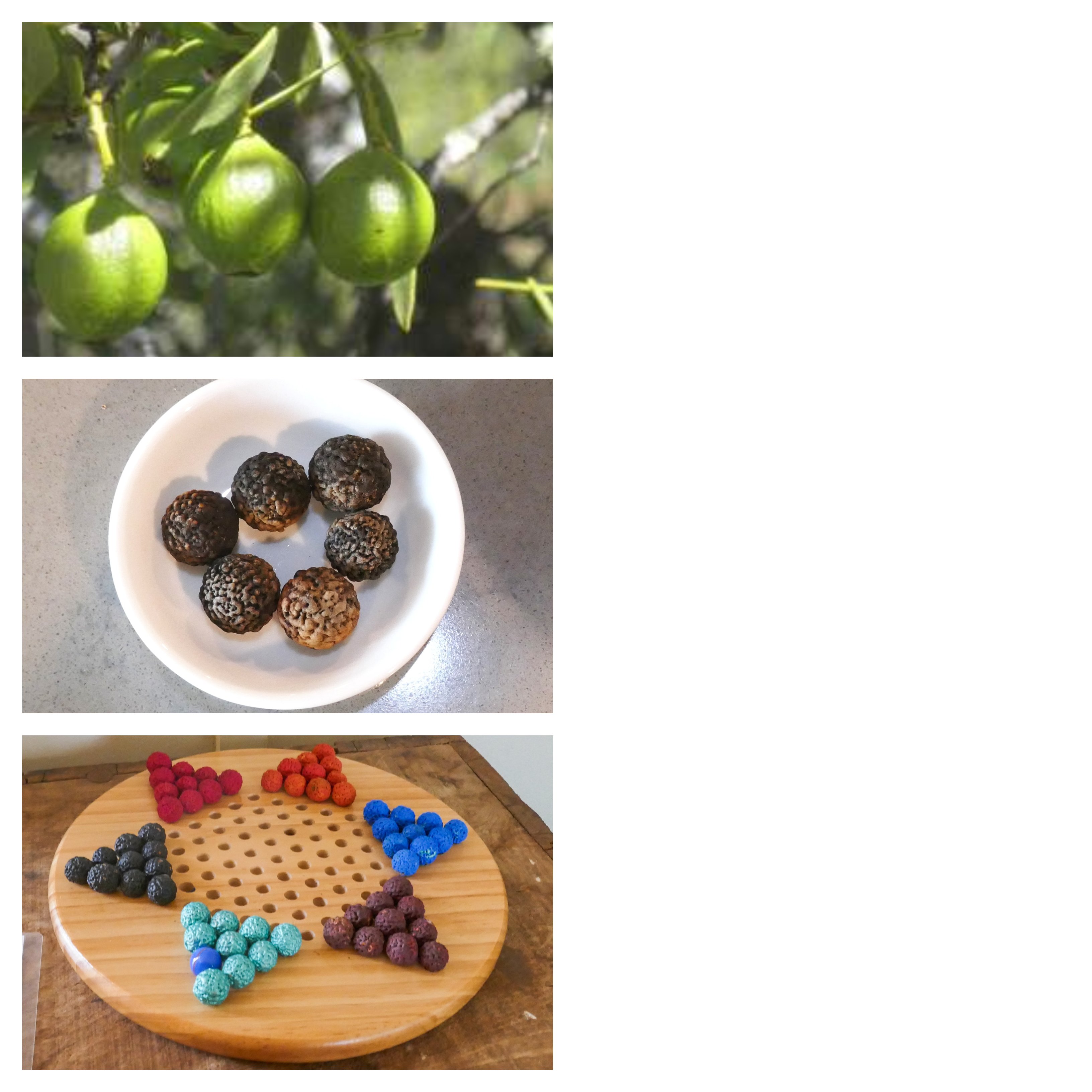
I was quite excited to see a quandong tree (Santalum acuminatum) while walking round Elachbutting Rock. I thought I took a photo of the fruits on the tree but somehow I missed the fruits and only have some branches. There were a lot of quandong nuts on the ground and I picked some up to bring home. The nuts were once used in Chinese checkers games as they are just the right size.
The quandong is hemiparasitic meaning its roots reach out to 10 metres to cling onto other root systems and make use of water and nutrients from the other plant. When the fruits ripen, they turn bright red and can be stewed and eaten. It’s designated as a tall shrub or small tree.
The photo shows (top to bottom) the fruits on the tree, taken on a previous trip, then the seeds I collected and finally a Chinese checkers set complete with quandong nut counters.
18 people like this
20 responses

@JudyEv (382357)
• Rockingham, Australia
14 Sep
I doubt you'd find them in your country. I think they only grow in Australia.

@ptrikha_2 (49775)
• India
14 Sep
@JudyEv
We might not even find in stores where we have Exotic Foreign imports or very rarely will !
2 people like this
@ptrikha_2 (49775)
• India
14 Sep
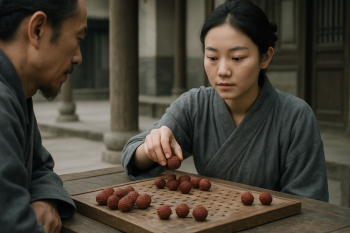
I generated an imaginary image using AI.
(manus.im)
1 person likes this

 Many people think of me as a simpleton !


@ptrikha_2 (49775)
• India
14 Sep
Wow !! That is quite some information and very interesting one.
It is so amazing that different cultures can make use of stuff around them in such interesting ways.
I can only imagine what would it be like playing Checkers games with these nuts.

1 person likes this

@GardenGerty (169530)
• United States
15 Sep
@JudyEv We use glass marbles for Chinese checkers here.
1 person likes this
@JudyEv (382357)
• Rockingham, Australia
15 Sep
@GardenGerty Maybe quandong nuts were only used in Australian products.
1 person likes this

@allknowing (153529)
• India
14 Sep
Not heard of these before Seems a native of Australia
Nice photos.
1 person likes this


@GardenGerty (169530)
• United States
15 Sep
I like the use as game pieces, very resourceful. Like our black walnuts it appears the soft green cover shrivels or breaks off to see the brown wrinkly nut.
1 person likes this
@JudyEv (382357)
• Rockingham, Australia
15 Sep
The outside turns bright red and can be eaten and yes, the kernel is dark with tiny indentations.


@DaddyEvil (174590)
• United States
14 Sep
I've heard or read about those trees/shrubs before but can't remember where/when. Maybe I'm remembering you writing about them before.
It's an interesting plant, at any rate.
1 person likes this
@DaddyEvil (174590)
• United States
14 Sep
@JudyEv That's probably where I heard about them before, then. Thank you for checking. I appreciate that.
1 person likes this

@RasmaSandra (98072)
• Daytona Beach, Florida
14 Sep
Never heard of this tree or nuts, Thanks for the info,
1 person likes this

@JESSY3236 (22244)
• United States
16 Sep
cool photos. I never heard of the tree or nut.
1 person likes this

@Traceyjayne (11437)
• United Kingdom
14 Sep
I gave never heard of these nuts 6and never seen them either.
1 person likes this

@snowy22315 (209080)
• United States
14 Sep
Never heard of them. Are they edible!
1 person likes this

@luisadannointed (11847)
• Philippines
18 Sep
Never heard of it. thank you for sharing, I don't think it is available in our country.


@JudyEv (382357)
• Rockingham, Australia
14 Sep
It's the outer flesh that gets eaten. Apparentely aboriginal people would crush the kernels and use as a bush medicine.


@LindaOHio (222623)
• United States
14 Sep
I've never heard of these nuts before. Thank you for sharing.
1 person likes this
