

Working to save bees

By Judy Evans
@JudyEv (384047)
Rockingham, Australia

July 6, 2026 5:38am CST
It’s common knowledge that the bee world is in grave danger. Bees don’t just produce honey but are essential as pollinators in orchards, vineyards and market gardens. More than 30% of Australia’s food production, worth an annual $4.6 billion, relies on bee pollination. The honey market itself is worth $237.5 billion.
The Varroa destructor is a parasitic mite that infests bees and is now present in five Australian states and territories. The mites are now developing a resistance to chemical and organic treatments.
Professor Volker Herzig has venom samples from over 870 arachnid species and has discovered that spider venom will kill the varroa mite. The venom only affects mites but not humans or animals. The process is someway off being in general use but in the meantime another professor, Rob Harvey, is working on interfering with the gene make-up of the mites.
Hopefully, there might be a solution in sight that would save bee populations from decimation.
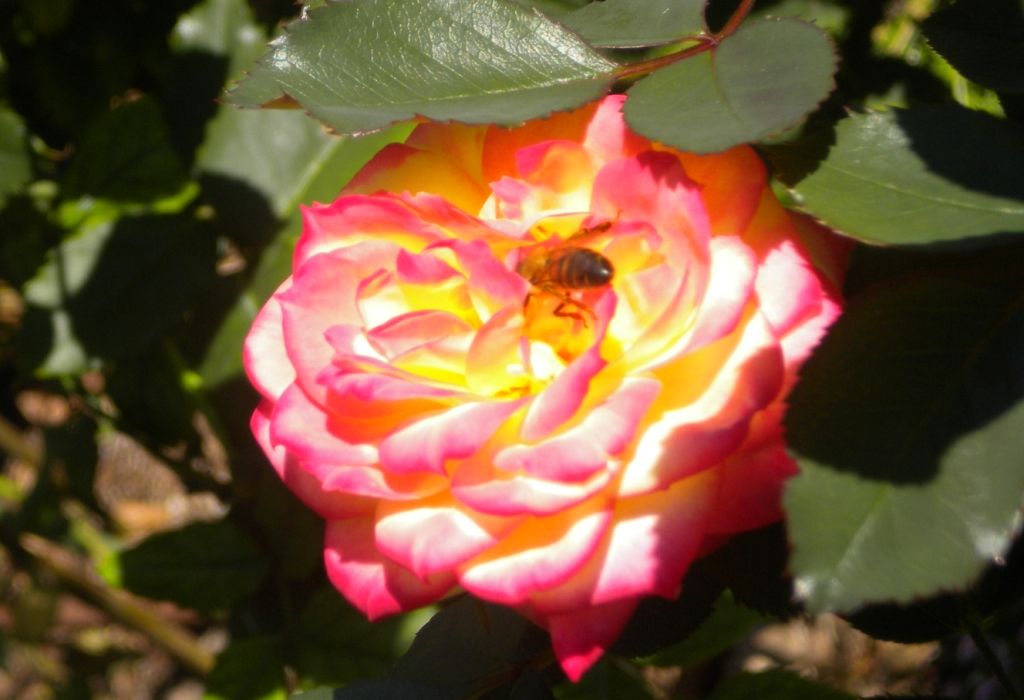
The photo is Vince's.
9 people like this
10 responses

@teamfreak16 (44088)
• Denver, Colorado
6h
Huh. Spiders are good for something. Who would've thought? 
3 people like this
@teamfreak16 (44088)
• Denver, Colorado
3h
@JudyEv - Thinking like a scientist must be very similar to thinking like an artist or musician. They're thinking about stuff regular people can't even figure out or comprehend, sometimes.
1 person likes this


@wolfgirl569 (136953)
• Marion, Ohio
3h
I hope something works. We need those little pains in my foot
1 person likes this


@rebelann (117531)
• El Paso, Texas
4m
Bees are in grave danger. Bees are also resposible for pollinating major forests, of course it would help if humanity would stop cutting down mature trees.


@DaddyEvil (175275)
• United States
34m
I wonder how much your Australian native pollinators would do if you didn't import European bees? The US also has native pollinators so the world isn't completely dependent on European bee species.

